
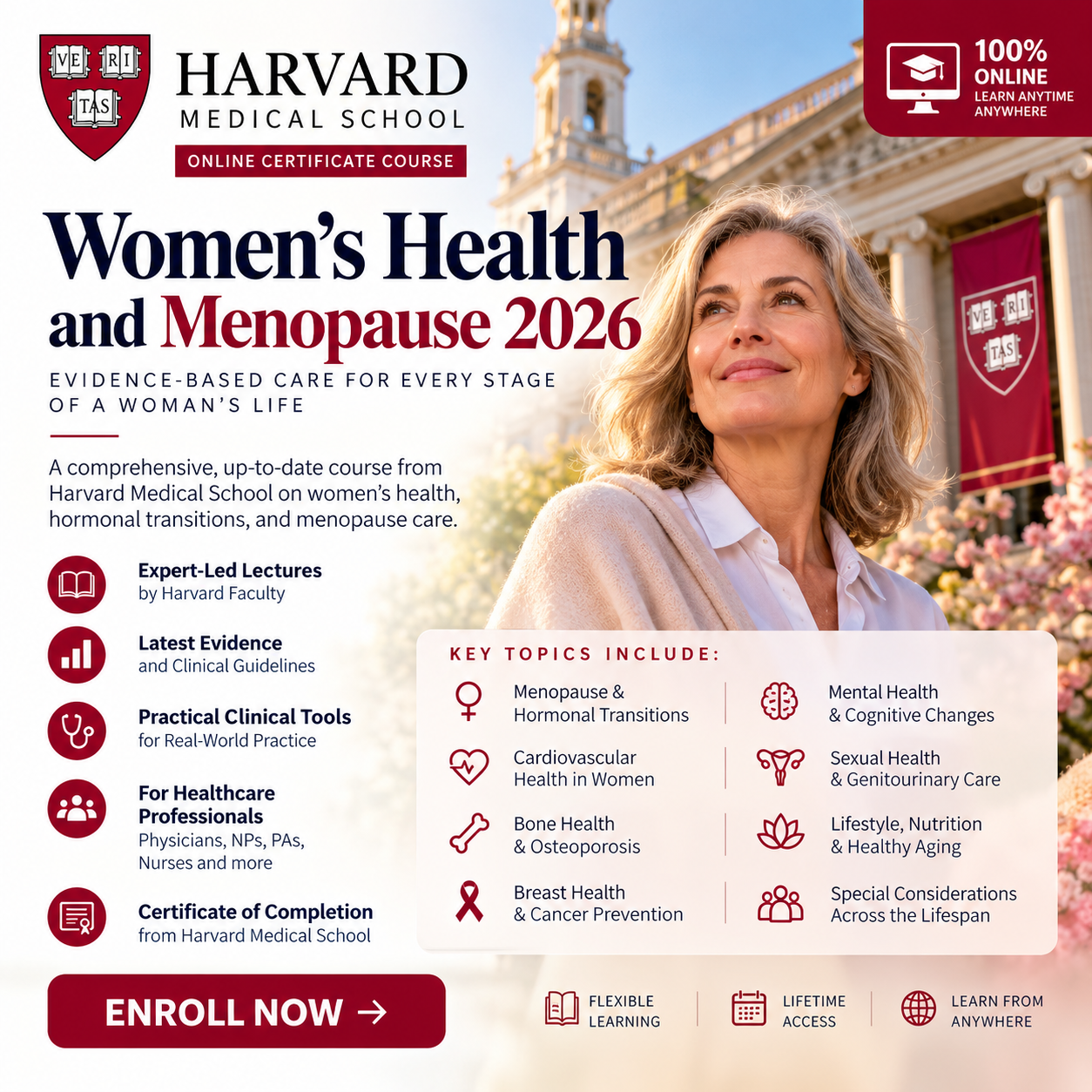


Midlife Is More Than
a Hormonal Transition.
The Women’s Health & Menopause 2026
course provides a comprehensive curriculum designed to strengthen clinical
expertise in the care of perimenopausal and menopausal women.
The program goes beyond isolated menopausal symptoms to examine how hormonal
change interacts with cardiovascular health, brain function, bone and muscle,
metabolism, sexual health, mental health, cancer risk and survivorship,
gastrointestinal health and healthy aging.
The expanded 2026 curriculum also examines evidence-based integrative medicine,
the musculoskeletal syndrome of menopause and complexities in caring for women
at risk for or living as breast cancer survivors.
Explore the WHAM 2026
Learning Experience
A comprehensive clinical learning library covering menopause science,
hormonal therapy and the broader health considerations affecting women
through midlife.
Women’s Health & Menopause 2026
Comprehensive Midlife & Menopause Clinical Education
One Hormonal Transition.
Whole-Body Clinical Effects.
WHAM approaches menopause as a multidimensional stage of health,
connecting hormonal physiology with clinical outcomes throughout the body.
Perimenopause & Menopause
Understand reproductive aging, hormonal transitions, menopausal symptoms
and individualized clinical management.
Cognition, Mood & Neurobiology
Explore estradiol, reproductive aging, brain fog, ADHD,
migraines, anxiety and mental health.
Cardiometabolic Health
Examine cardiovascular risk, metabolic change, weight management
and sex-based differences in cardiovascular disease.
Musculoskeletal Health
Bone protection, osteoporosis, osteoarthritis, fitness and the
musculoskeletal syndrome of menopause.
Sexual Function, GSM & Pelvic Care
Genitourinary syndrome, libido, sexual pain, pelvic floor care
and testosterone in clinical practice.
Cancer, Survivorship & Healthy Aging
Breast health, gynecologic malignancy, cancer survivorship
and individualized midlife care.
Menopausal Hormone
Therapy in 2026
Develop a deeper understanding of the evidence, clinical reasoning,
safety considerations and individualized decision-making involved
in menopausal hormone therapy.
The Hormone Therapy
Decision Lens
A structured clinical perspective for considering menopausal therapy
in the context of the individual patient.
Symptoms
Define symptoms affecting quality of life and daily function.
Hormonal Stage
Consider reproductive aging, perimenopause and menopausal status.
Medical Context
Review cardiovascular, metabolic, bone, oncologic and gynecologic factors.
Risk & Benefit
Apply current evidence to individualized treatment considerations.
Shared Clinical Strategy
Develop an individualized management approach based on evidence, patient needs and clinical context.
Menopause Across
Major Organ Systems
Cognition & Neuropsychiatric Health
Estradiol and reproductive aging, brain fog, ADHD, mood changes,
anxiety and migraines.
Cardiovascular Health
Cardiometabolic changes, cardiovascular disease,
thrombosis and hormone-related considerations.
Bone & Musculoskeletal Health
Osteoporosis prevention and treatment, osteoarthritis,
musculoskeletal syndrome and physical fitness.
Weight & Metabolic Health
Weight management, obesity and metabolic change
through the menopausal transition.
Clinical Conversations
That Matter.
The curriculum addresses sexual health as an essential component
of comprehensive midlife care.
Complex Menopause Care
After Breast Cancer.
WHAM 2026 expands its focus on the complexities of caring for women
at risk for or living as breast cancer survivors.
Evidence Beyond
Prescriptions
The expanded curriculum explores evidence-based lifestyle
and integrative approaches relevant to women in midlife.
From Evidence to
Clinical Confidence
Recognize hormonal phases and the science of perimenopause and menopause.
Apply clinical reasoning to menopausal symptoms and complex cases.
Develop management strategies involving estrogen, progesterone and testosterone when clinically indicated.
Understand weight gain, obesity and cardiometabolic change in menopause.
Review safety, risk and alternatives to menopausal hormone therapy.
Consider nutrition, exercise, sleep and stress management.
Address sexual health, pelvic therapy, hormonal treatment and counseling.
Consider cardiovascular, musculoskeletal, dermatologic, gastrointestinal, metabolic, neuropsychiatric and oncologic conditions.
63 Clinical Topics
A comprehensive curriculum spanning menopause science,
hormonal therapy, lifestyle medicine and complex women’s health.
VIDEO AND PDF NOT RELEASED
Who Should Study
WHAM 2026?
Particularly relevant for gynecologists, internists and family medicine
physicians seeking comprehensive updates in menopause management,
hormone therapy and midlife health.
A Comprehensive
Digital Library
Video Files
Focused clinical presentations across the comprehensive WHAM curriculum.
VTT Subtitle Files
Subtitle files accompanying the available course videos.
PDF Files
Supporting educational materials for review and study.
Total Course Library
An extensive collection of women’s health and menopause education.
From Menopause Symptoms
to Whole-Woman Care.
WHAM is designed to strengthen confidence and competence in the
comprehensive care of women through midlife and menopause by integrating
hormonal changes with broader clinical health.
“`





Reviews
There are no reviews yet.