


ECG • ARRHYTHMIAS • IMAGING • CARDIOMYOPATHY • RETURN TO PLAY
Performance Changes the Heart.
The Challenge Is Knowing What Is Normal.
Athletic training produces cardiovascular adaptations that can overlap
with findings associated with underlying disease. Distinguishing physiologic
remodeling from clinically significant pathology is one of the central
challenges in modern sports cardiology.
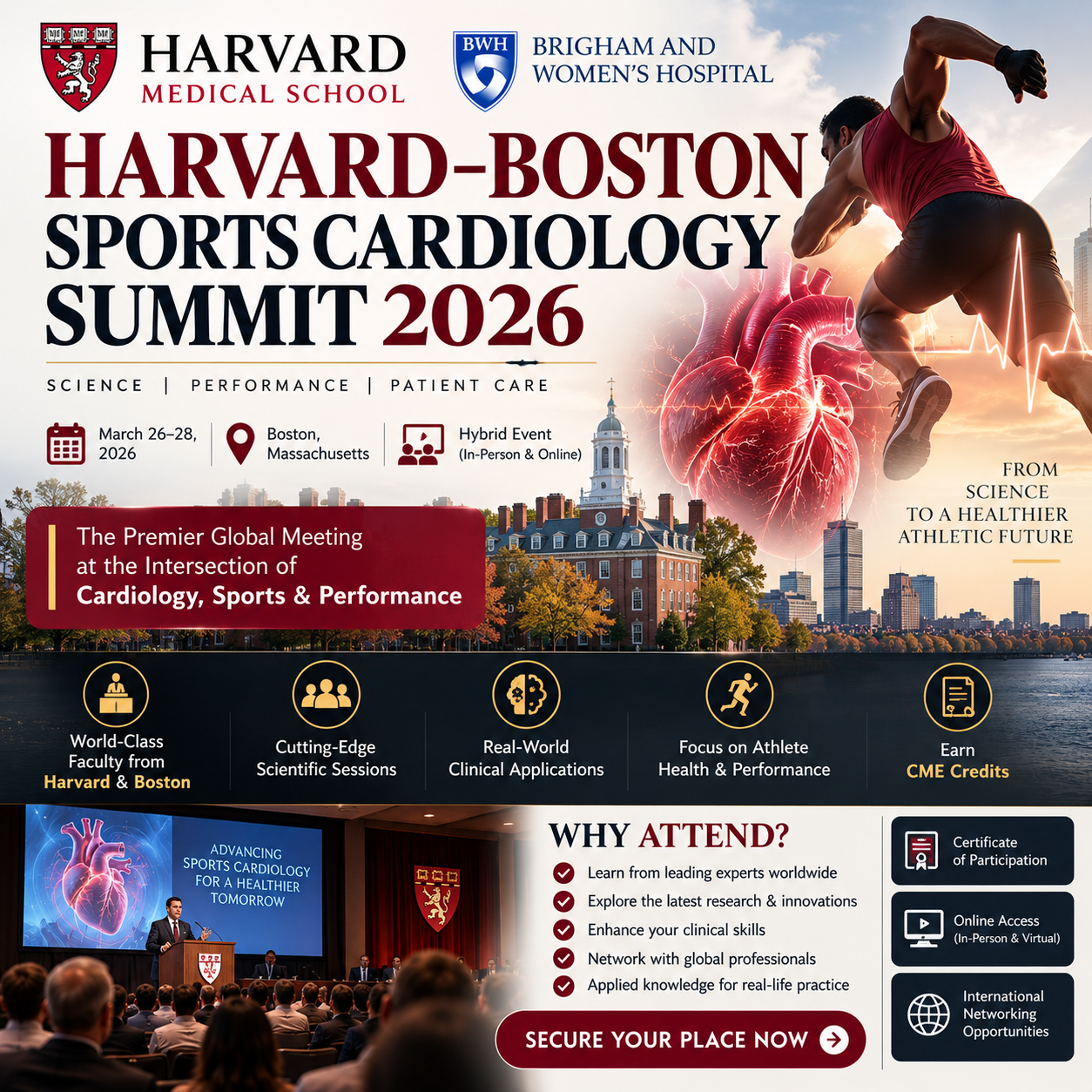
The Harvard Boston Sports Cardiology Summit 2026
explores this clinical intersection through expert presentations,
case-based discussions and practical cardiovascular decision-making
for competitive, recreational and tactical athletes.
Across two days, the curriculum moves from cardiovascular screening
and ECG interpretation to arrhythmias, coronary disease, advanced imaging,
cardiomyopathies and evidence-based return-to-play decisions.
Step Inside the Summit
Preview key areas of the two-day program, from athlete cardiovascular
screening and rhythm interpretation to advanced imaging and return-to-play decisions.
Athlete ECG & Cardiovascular Screening
Explore athlete-specific ECG interpretation, screening principles
and the distinction between physiologic adaptation and concerning findings.
Arrhythmias & Sports Participation
Review rhythm disorders encountered in athletes and the clinical
questions surrounding risk assessment and continued participation.
Cardiac Imaging & Return to Play
See how echocardiography and cardiac MRI contribute to evaluation
of structural disease, myocarditis and athlete clearance decisions.
Six Questions That Shape
Sports Cardiology Decisions
The program connects diagnostic findings with the practical questions
clinicians face when evaluating active individuals.
Is There a Cardiovascular Red Flag?
Apply contemporary athlete evaluation and pre-participation
cardiovascular screening principles.
Is This Athlete ECG Normal?
Differentiate expected training-related findings from ECG abnormalities
that warrant additional investigation.
What Is the Rhythm Risk?
Evaluate atrial fibrillation, PVCs and ventricular arrhythmias
in physically active patients.
Remodeling or Cardiovascular Disease?
Integrate echocardiography and cardiac MRI into evaluation
of the athletic heart.
How Much Risk Does Exercise Add?
Consider cardiomyopathy, coronary disease, inherited conditions
and sudden cardiac arrest risk.
Can the Athlete Return to Play?
Translate clinical findings into individualized,
evidence-based participation decisions.
Normal Adaptation
or Diagnostic Warning?
Athlete ECG interpretation is a major component of sports cardiology.
The summit reviews updated international ECG criteria and applies
them through interactive athlete ECG cases.
When an Athlete
Has an Arrhythmia
The curriculum examines rhythm disorders through the specific
lens of exercise, athletic performance and sports participation.
See Beyond
the Athlete’s Performance.
Advanced cardiovascular imaging helps clinicians distinguish
physiologic adaptation from structural disease and informs
risk assessment in athletes.
Review echocardiographic assessment of athletic cardiovascular remodeling.
Explore remodeling, clinical interpretation and surveillance.
Use advanced imaging to investigate structural and myocardial abnormalities.
Connect imaging findings with clinical assessment and participation decisions.
Fitness Does Not Eliminate
Coronary Risk.
The summit examines coronary artery disease in endurance and masters athletes,
including risk assessment, treatment strategies and return to competition.
Marathon data and coronary risk.
Cardiovascular risk in aging athletic populations.
Review clinical management considerations.
Transition cardiovascular treatment back toward physical activity.
Evaluation • Arrhythmias • CAD • Imaging
From initial athlete evaluation through rhythm assessment,
coronary risk and advanced cardiovascular imaging.
Cardiomyopathy • Special Populations • Athlete Safety
Inherited disease, complex clearance decisions, special athletic
populations and systems designed to protect athletes.
The Diagnosis Is Only
the Beginning of the Decision.
Athletes with inherited or acquired cardiovascular disease
raise complex questions involving risk, exercise intensity,
performance and safe participation.
Different Athletes.
Different Cardiovascular Questions.
Preparation Matters
Before the Emergency Happens.
Sports cardiology extends beyond diagnosis. The program also examines
community safety, sudden cardiac arrest response and systems that can
improve emergency preparedness.
Build a Stronger Sports
Cardiology Framework
Both Days.
Videos + Presentation Slides.
Recorded Video Lectures
Athlete evaluation, ECG, arrhythmias, coronary disease,
CPET and advanced cardiac imaging.
Recorded Video Lectures
Cardiomyopathies, special populations, pediatric sports cardiology,
return to play and athlete safety.
PDF Presentation Slides
Accompanying educational slides for convenient review alongside the recordings.
For Clinicians Caring
for Active Hearts
Relevant for healthcare professionals involved in cardiovascular
evaluation, sports participation, performance and athlete safety.
Boston Sports Cardiology Summit 2026
September 25–26, 2026
2 Days
Recorded Video Lectures + PDF Slides
Cardiology • Sports Cardiology • Sports Medicine
2026
The Question Is Not Only
“What Is the Diagnosis?”
It is also: “Can this athlete safely continue?”
Sports cardiology sits at the intersection of cardiovascular disease,
exercise physiology, performance, individual risk and shared clinical
decision-making. The summit examines this intersection across athletes
of different ages, competitive levels and cardiovascular conditions.
“`



Reviews
There are no reviews yet.