
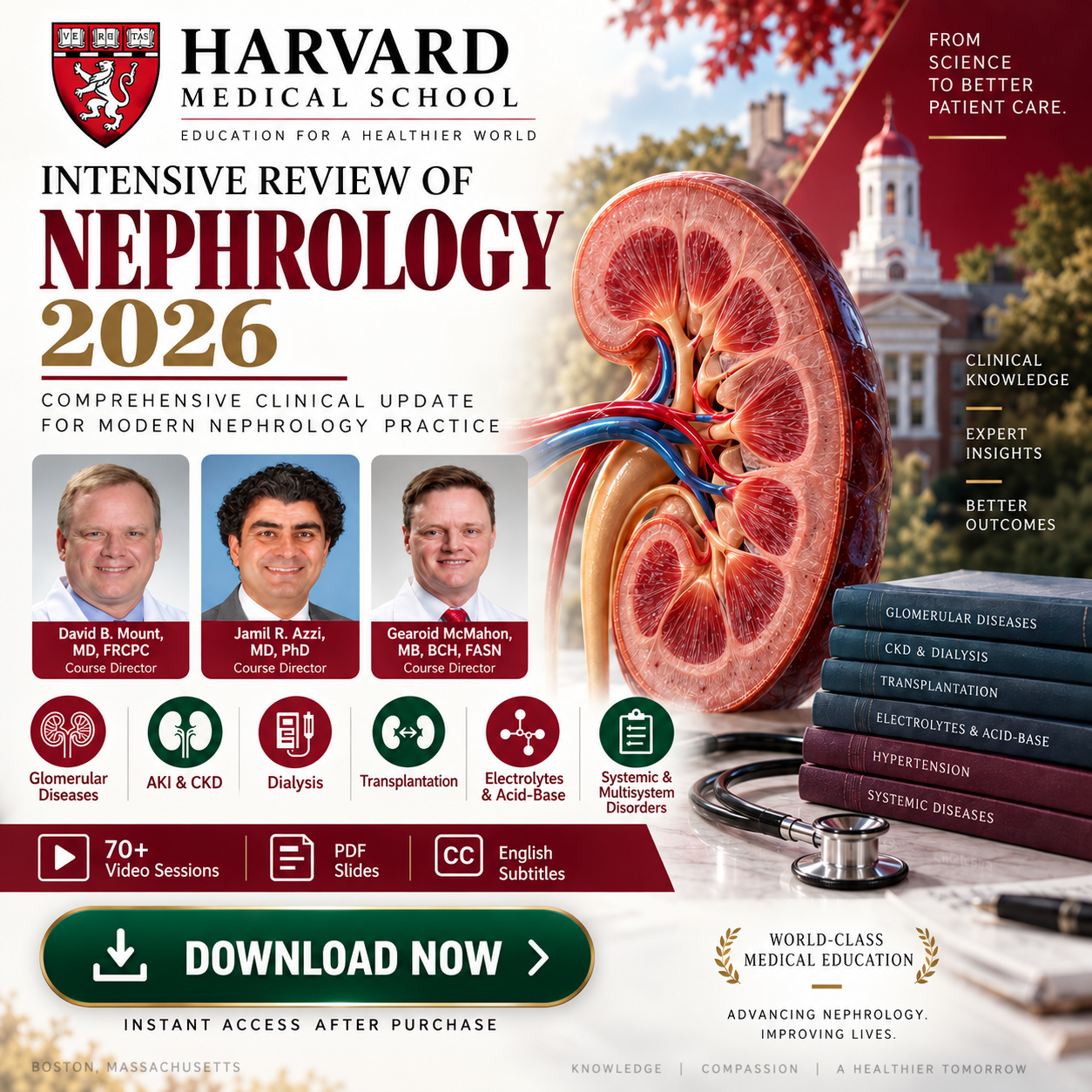



Intensive Review of Nephrology 2026
A comprehensive five-day clinical nephrology update and ABIM Nephrology Board Review covering the major areas of kidney medicine—from renal physiology and glomerular disease to dialysis, transplantation, genetics, ultrasound and emerging therapies.
A Deep, Practical Review of Modern Nephrology
Harvard Intensive Review of Nephrology 2026 is designed to provide a structured, in-depth review of the current state of the art across the major domains of nephrology. The program combines clinical updates with board-focused teaching, case discussions, faculty Q&A sessions and self-paced review content.
Across five days, the curriculum moves from core renal physiology, immunology and pathology into glomerular disorders, electrolyte and acid-base problems, genetic kidney disease, transplantation, acute kidney injury, cardiorenal disease, dialysis and special populations.
The course is suitable both for clinicians who want a broad update in contemporary nephrology and physicians preparing for the ABIM Nephrology Board Certification or Recertification Examination.
What You Receive
- Complete course video materials
- Subtitles for supported course videos
- PDF presentation slides
- Clinical lectures and faculty discussions
- Board-review and self-paced educational sessions
What Does the Course Cover?
The curriculum spans the clinical problems nephrologists encounter in practice and the high-yield areas physicians need to understand for board preparation.
Pathology, urine sediment, IgA nephropathy, lupus nephritis, membranous disease, RPGN and treatment updates.
CKD epidemiology, diabetic kidney disease, geriatric nephrology and evolving medical therapies.
AKI pathophysiology, biomarkers, ICU nephrology, renal replacement therapy and complex AKI syndromes.
Metabolic acidosis and alkalosis, sodium disorders, potassium disorders and case interpretation.
Renal genetic testing, integration into practice and polycystic kidney disease updates.
Immunological assessment, immunosuppression, rejection, donor/recipient evaluation and post-transplant care.
Hemodialysis, hemodiafiltration, peritoneal dialysis, vascular access, anemia and mineral-bone disease.
Primary and secondary hypertension, renovascular disease and primary aldosteronism.
Onconephrology, pregnancy, pediatric nephrology, renal ultrasound, xenotransplantation and AI.
Important Developments Included in the Program
The 2026 curriculum incorporates emerging diagnostic tools, therapeutic strategies and evolving areas of kidney medicine.
Diagnosis, prognosis and therapy-selection applications in kidney disease.
Renal image acquisition and practical clinical ultrasound.
Expanded roles of SGLT2 inhibitors, GLP-1 agonists and finerenone.
Novel immunosuppressive approaches and important new GN trials.
Xenotransplantation and contemporary transplant-management concepts.
Clinical applications of artificial intelligence in modern kidney care.
Follow the Course From Foundations to Advanced Clinical Practice
The program is organized as a progressive five-day review, with lectures, faculty Q&A and supplementary self-paced sessions.
August 10
Renal physiology for the boards, autoimmune kidney disease, renal pathology, urine sediment analysis, IgA nephropathy, kidney stones, AI in nephrology, lupus nephritis, membranous nephropathy and anemia management.
August 11
Metabolic acidosis and alkalosis, sodium and potassium disorders, new GN trials, genetics and kidney disease, polycystic kidney disease, pediatric nephrology and rapidly progressive glomerulonephritis.
August 12
Transplant rejection, immunosuppression, immunological assessment, early and late transplant management, donor evaluation, infections, transplant monitoring, thrombotic microangiopathies and xenotransplantation.
August 13
Cardiorenal syndrome, hypertension in CKD, primary aldosteronism, FSGS, liver-kidney disease, AKI, ICU nephrology, cancer-associated kidney injury, diabetic kidney disease and APOL1.
August 14
Dialysis dosing, hemodiafiltration, mineral and bone disease, case-based dialysis review, CKD epidemiology, peritoneal dialysis, immune-checkpoint-inhibitor AKI, renal ultrasound and vascular-access assessment.
More Than a Lecture Collection
The course combines topic-based lectures with clinical discussions, faculty Q&A, board-review exercises and supplementary sessions. This structure helps connect core nephrology knowledge with real clinical decision-making and exam-focused review.
Board Review Components
- Renal physiology for the boards
- Must-know clinical images
- Must-know board “zebras”
- Nephrology board-review practice sessions
- Transplant board-review content
- Case-based clinical review
Who Is This Program Designed For?
Harvard Intensive Review of Nephrology 2026
Study the full five-day nephrology curriculum through course videos, subtitles and PDF presentation slides, with content spanning core clinical nephrology, advanced updates and board-focused review.




Reviews
There are no reviews yet.